
Ready to move your business phones to VoIP? Brydan’s local team designs, installs, and supports cloud phone systems for Las Vegas businesses — part of our VoIP & phone system services.
Key Takeaways
- ›Business VoIP carries calls over your internet connection instead of copper phone lines — usually cheaper, more flexible, and loaded with features landlines can’t match.
- ›Reliable call quality depends on enough bandwidth, QoS on your network, and ideally a second internet connection so calls don’t drop.
- ›Expect standard features like auto-attendant, call routing, voicemail-to-email, mobile and desktop softphones, and lines you can add or remove in minutes.
- ›Carriers are retiring and repricing old copper (POTS) lines — most Las Vegas businesses are moving to VoIP anyway, so planning the switch beats being forced into it.
If your office phones still run over traditional copper lines, you are paying more than you need to for less than you could have — and the carriers are quietly retiring those lines anyway. Most Las Vegas businesses that ask us about “new phones” are really asking about VoIP, whether they know the term or not. Here is what it means in plain English.
What Is Business VoIP, Exactly?
VoIP stands for Voice over Internet Protocol. Instead of carrying your calls over the copper wires of the old phone network, VoIP turns your voice into digital data and sends it over the same internet connection you already use for everything else. To the person on the call, it sounds like a normal phone call. Behind the scenes, it is data traveling the internet rather than a dedicated phone line.
For most businesses today, VoIP is delivered as a hosted (cloud) phone system. The “brains” of the phone system — what used to be a physical PBX box in a closet — lives in your provider’s data center. You just have handsets, an app, or both. There is no on-site phone system to maintain, and adding or changing lines is a settings change instead of a service call.
How Business VoIP Actually Works
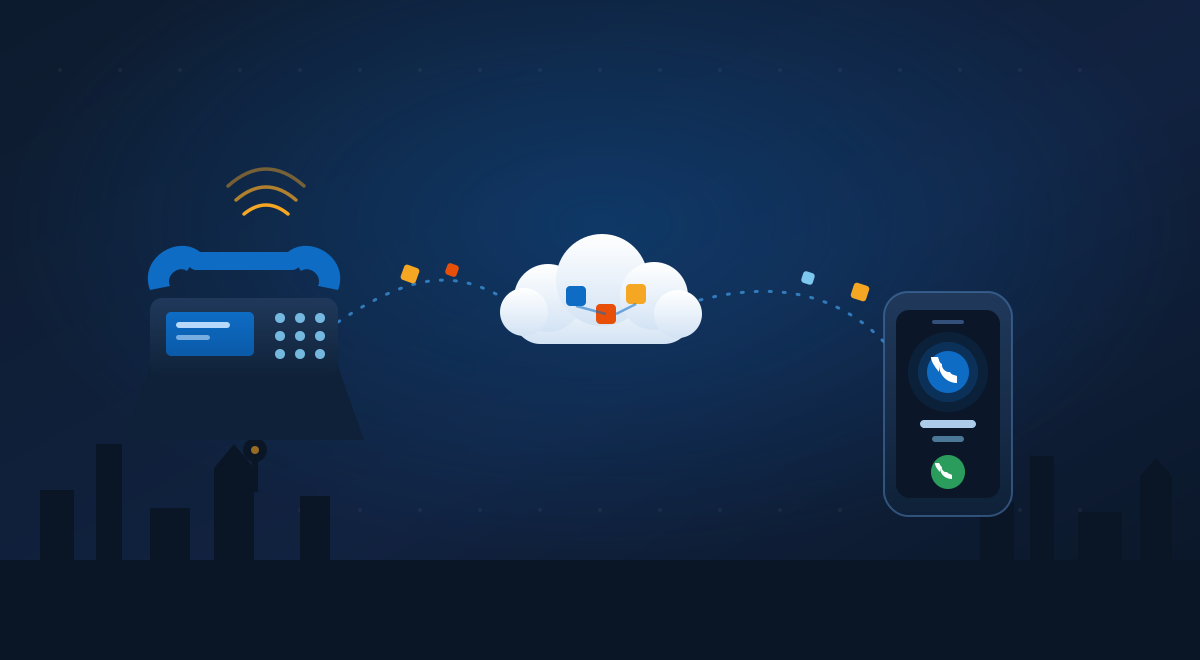
When you speak, a VoIP phone or app converts your voice into small digital packets. Those packets travel over your internet connection to your provider’s cloud platform, which routes the call to its destination — another VoIP phone, a mobile number, or a traditional landline. The whole trip happens in milliseconds, which is why a well-configured VoIP call sounds as natural as a landline.
You can make and take calls on a few different devices, and mix them however suits your team:
- Desk IP phones — look and feel like a normal office phone, but plug into your network instead of a phone jack.
- Softphones — an app on a computer that turns a headset into a full extension.
- Mobile apps — your office number rings on your cell phone, and calls you make show your business number, not your personal one.
What You Need for Reliable Call Quality
Because VoIP rides on your internet connection, call quality depends on the connection and the network behind it. This is where the difference between a phone system that “works” and one that sounds crystal clear is decided — and where a good local partner earns their keep.
- Enough bandwidth — each call uses only a small slice of your internet, but many simultaneous calls add up. A quick assessment sizes this against how your team actually uses the phones.
- Quality of Service (QoS) — a network setting that gives voice traffic priority over things like large downloads, so a big file transfer never turns a call choppy.
- A backup internet connection — if your primary internet goes down and your phones live on the internet, your phones go down too. A second connection keeps calls flowing. (See why every business needs a backup internet plan.)
- Battery backup on network gear — a small UPS keeps your router, switch, and phones alive through a short power blip.
None of this is complicated to get right — but it is the part do-it-yourself VoIP setups usually skip, which is why they end up with the dropped-call, robot-voice reputation VoIP does not deserve.
The Features You Should Expect
This is where VoIP pulls ahead of copper. Features that used to require an expensive on-site phone system come standard with a modern cloud platform:
- Auto-attendant — the “press 1 for sales” greeting that routes callers without a receptionist.
- Call routing and ring groups — ring the whole team, follow a schedule, or forward to a cell after hours.
- Voicemail-to-email — voicemails arrive as audio files or transcripts in your inbox.
- Work from anywhere — the same extension rings at the office, at home, or on a cell, so remote and hybrid staff are reachable on the business number.
- Easy scaling — add a line for a new hire in minutes; remove it just as fast. No technician visit, no new wiring.
Copper Phone Lines Are Going Away
Even if you are happy with your current phones, the decision may not stay in your hands. Traditional copper landlines — often called POTS (plain old telephone service) lines — are being retired and steadily repriced as carriers wind down the old network. Many businesses have watched the bill for a couple of basic lines climb well past what a full VoIP system costs.
The practical takeaway: the move off copper is coming regardless. Planning the switch on your own schedule — porting your existing numbers, testing call quality, training your team — is far less painful than scrambling when a line is discontinued or a price hike lands. (We covered the shift in detail in the copper line sunset and what it means for Las Vegas phones.)
Is VoIP Right for Your Las Vegas Business?
For the overwhelming majority of small and mid-sized businesses, yes — especially if you have remote or hybrid staff, more than one location, a growing team, or aging phone equipment. The savings, flexibility, and features almost always outweigh the old landline, provided the network side is set up properly.
When you evaluate a provider, look for one that treats VoIP as part of your whole network — not a box they drop-ship and walk away from. The right partner assesses your internet and network first, plans for a backup connection, ports your numbers cleanly, and is local enough to answer when you call. That is exactly how Brydan approaches business VoIP and phone systems.
Talk to Brydan
Still Paying for Copper Phone Lines?
Brydan Solutions plans and installs cloud phone systems for Las Vegas businesses — sizing your internet, setting up call quality, porting your numbers, and supporting it locally. See what a move to business VoIP would look like for your team.
About the Author
Brydan Solutions is a veteran-owned, minority-owned managed IT and cybersecurity provider based in Las Vegas, serving Nevada businesses since 2002. Our team manages IT, cybersecurity, Microsoft 365, and business continuity for small and mid-sized organizations across the Las Vegas Valley and remotely nationwide. Learn about our team or talk to a real person.
Continue Reading